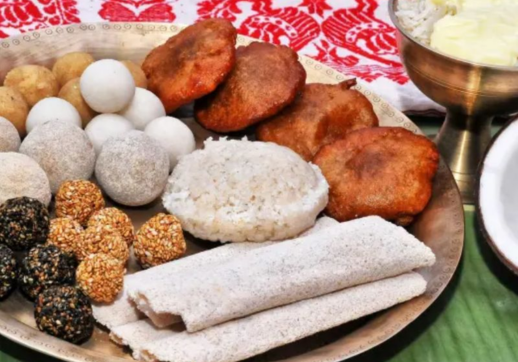
There are cuisines that attract attention through the layer of spices, elaborate techniques, and blended ingredients. Among them, food of Assam is one of the most remarkable delights that can give you a flavorful memory. Tucked into the lush, rain-soaked folds of northeastern India, traditional cuisine of Assam is highly distinctive and celebrated.
Its cooking philosophy is deeply rooted in the rhythms of the land. In fact, eating their food is all about understanding Assamese culture that has always lived in intimate conversation with its rivers, forests, and seasons. This cuisine doesn’t shout, and whispers its profound existence.
Philosophy Behind Assamese Kitchen
Before exploring individual ingredients and dishes, let us understand the spirit governing the Assamese kitchen. Unlike many Indian regional cuisines defined by the richness of ghee, the warmth of whole spices, or the complexity of masala blends, Assamese cooking is defined by restraint and freshness. The cuisine relies heavily on minimal use of oil, limited spices, and an emphasis on preserving the natural flavour of every ingredient.
Even, the mustard oil is used frugally and purposefully. Fermentation plays a significant role, with attention on the ancient preservation technique passed down through generations. Indeed, everything on the Assamese table traces its origin to a nearby river, a forest floor, a kitchen garden, or a neighbouring farm. This proximity to the source highlights the taste of Assam in its pure form, which is rare in modern cooking.
Khar — The Soul of the Assamese Table
No ingredient captures the essence of Assamese cooking quite like Khar. It is a unique alkaline substance prepared from the ash of sun-dried banana peels. These peels are burned, and water is filtered through the resulting ash. It is done to produce a liquid used both as an ingredient and a cooking agent. Khar gives dishes a distinctive and smoky quality, unlike anything in other cuisines. It tenderises proteins, aids digestion, and imparts a depth of flavour that no conventional spice can replicate. A traditional Assamese meal almost always begins with a khar dish, typically raw papaya cooked with mustard oil, pulses, or fish.
The Rivers on the Plate — Fish in Assamese Cuisine
Assam is a land defined by water, where the mighty Brahmaputra and its vast network of tributaries, wetlands, or floodplains reside. This makes fish not merely a food source, but a cultural cornerstone. Fish is an important element of Assamese food on every significant occasion, be it weddings, festivals or religious ceremonies.
Masor Tenga
It is the most beloved fish preparation in traditional Assamese cuisine. This delectable dish is a light, tangy fish curry made with tomatoes, elephant apples (ou tenga), or dried mangoes. When most fish curries highlight richness, Masor Tenga leans towards brightness. The sourness is deliberate and refreshing, cutting through the natural opulence of the fish with elegant precision. It is comfort food of the highest order and the kind of dish that tastes like home, regardless of where you eat it.
Patot Diya Maas
It is another gem in the cultural dishes of Assam. As a part of the preparations, the fish is marinated in mustard paste, wrapped in banana leaves, and slow-cooked over a gentle flame. The banana leaf imparts a subtle, grassy fragrance to the fish, while the mustard adds warmth and pungency. This cooking technique is as old as the land itself, and the resultant dish is exceptional in taste.
Bamboo, Banana, and the Forest Pantry
One of the most fascinating dimensions of Assamese cooking is its use of ingredients sourced directly from the forest and the wild landscape surrounding human settlements. Bamboo shoots, fresh or fermented, are among the most widely used ingredients in the Assamese kitchen, appearing in curries, stir-fries, and chutneys.
Fermented bamboo shoot, known as Khorisa, has a strong, deeply savoury quality reminiscent of aged cheese. It is used to flavour pork dishes, fish preparations, and vegetable sides. This adds an umami depth that anchors the entire dish. For first-time eaters, the aroma might be challenging. Once you experience the taste, it won’t leave your memories, as Khorisa is one of the famous foods of Assam.
Taking note of the banana plant, it is used with extraordinary wholeness in Assamese cooking. The flower, raw fruit, stem, and leaves are all used in the kitchen to prepare dishes. Kolar Phool is the banana flower cooked with mustard and coconut. This is a delicate, subtly bitter preparation. Its preparation showcases the Assamese talent for transforming humble, overlooked ingredients into something genuinely beautiful.
Pork and the Highlands Connection
In the hilly regions of Assam and among communities like the Bodos and Misings, pork occupies a central place in the culinary identity. Pork with bamboo shoot is slow-cooked until the fat renders into the tangy, fermented shoots. It is a dish of astonishing flavour and satisfying depth. The combination of rich, unctuous pork with the sharp, fermented shoots creates a balance of fat and acid that feels primal. This dish is bold, earthy, and unapologetically rustic, representing the communities creating it.
Rice — The Heartbeat of Every Meal
In traditional cuisine of Assam, rice is not merely a staple, rather a way of life. The state cultivates an astonishing variety of rice, including the world-renowned Joha rice. It is a short-grained aromatic variety with a natural fragrance reminiscent of sandalwood or fresh earth after rain. Joha rice is not just food; it is a source of deep regional pride.
Pitha
These are traditional rice cakes prepared during the festival of Bihu, representing rice in its most celebratory form. Steamed, pan-fried, or wrapped in leaves and slow-cooked over embers, pithas come in dozens of varieties. Each variety has its own texture, filling, and festive significance. Preparing pitha is a communal act where families gather in kitchens, stories are exchanged, and recipes are passed from older generations to younger ones. In this way, the preparation of Pitha becomes the hauler of culture itself.
The traditional Assamese cuisine deserves a place at the table of India’s great culinary traditions. In a world where food has become increasingly theatrical, the pantries of Assam offer something quietly radical. Here, the ingredients are treated with honesty, techniques refined by centuries of practice, and flavours that speak directly of the land they come from. In fact, the cuisine and its flavours have always highlighted exceptionally subtle Assamese culture.